What - Natural Sciences
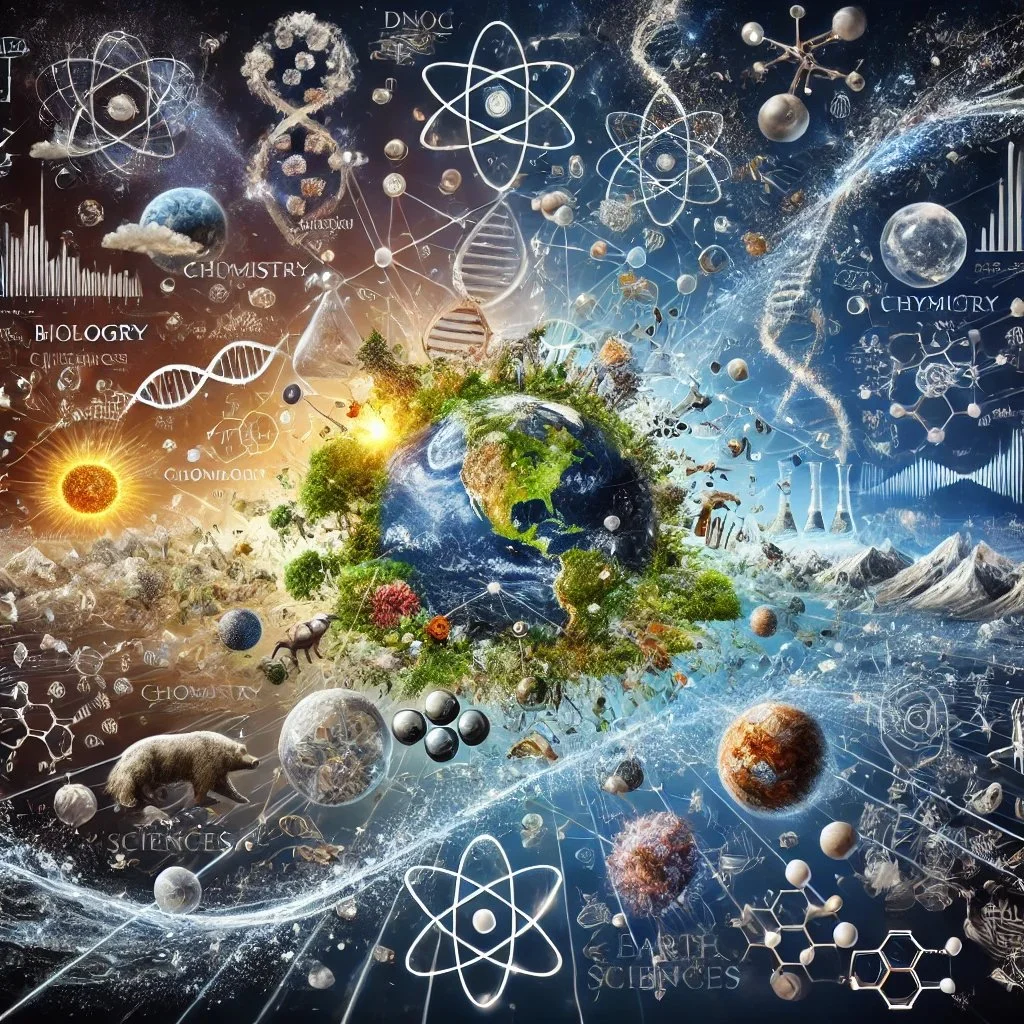
Natural Sciences: Exploring the Building Blocks of the Universe
Natural Sciences is the foundation of our understanding of the natural world, encompassing the study of life, matter, energy, and the forces that govern the universe. From the tiniest particles that make up matter to the vast ecosystems teeming with life, Natural Sciences provides a framework for understanding the principles and phenomena that shape our reality. In the ARKHIVE, this domain is dedicated to uncovering the secrets of nature through biology, physics, chemistry, earth sciences, and more, each subcategory diving deeper into the intricate mechanisms that govern life and the environment.
Subcategories under Natural Sciences:
1. Biology
Description: The study of life and living organisms, focusing on their structure, function, growth, evolution, and interaction with the environment. Biology explores the diversity of life on Earth, from microscopic organisms to the vast ecosystems that support life.
Subcategories:
Zoology (Animals): The study of animal life, classification, behavior, and evolution.
Botany (Plants): The scientific study of plant life, focusing on growth, reproduction, and their roles in ecosystems.
Genetics: The study of genes, heredity, and the variation of organisms.
Microbiology: The study of microorganisms such as bacteria, viruses, fungi, and protozoa.
Evolutionary Biology: The study of how organisms evolve and adapt over time through natural selection and genetic variation.
Example Path:
WHAT → Knowledge Domains → Natural Sciences → Biology → Zoology
2. Chemistry
Description: The study of matter, its properties, composition, and how substances interact with each other. Chemistry bridges biology and physics, exploring the chemical processes that govern everything from cellular function to material creation.
Subcategories:
Organic Chemistry: The study of carbon-containing compounds and their properties.
Inorganic Chemistry: The study of inorganic compounds, metals, and minerals.
Biochemistry: The study of chemical processes within living organisms.
Physical Chemistry: The study of how matter behaves on a molecular and atomic level and how chemical reactions occur.
Example Path:
WHAT → Knowledge Domains → Natural Sciences → Chemistry → Organic Chemistry
3. Physics
Description: The fundamental study of the forces, energy, and matter that define the universe. Physics seeks to understand how the universe works, from the smallest subatomic particles to the largest galaxies, focusing on the laws of motion, energy, and the fundamental forces of nature.
Subcategories:
Classical Mechanics: The study of motion and forces on macroscopic objects.
Quantum Physics: The study of matter and energy on the atomic and subatomic levels.
Thermodynamics: The study of heat, energy, and the laws governing energy transfer.
Astrophysics: The study of the physical properties of celestial bodies and the universe as a whole.
Example Path:
WHAT → Knowledge Domains → Natural Sciences → Physics → Quantum Physics
4. Earth Sciences
Description: Earth Sciences explore the physical characteristics of our planet, from its geological formations to its atmosphere and oceans. This field focuses on understanding Earth's processes, resources, and how the planet sustains life.
Subcategories:
Geology: The study of Earth's physical structure, history, and the processes that shape it.
Meteorology: The study of weather and atmospheric processes.
Oceanography: The study of Earth's oceans, including marine life, currents, and the ocean’s role in climate.
Environmental Science: The study of ecosystems, biodiversity, and the human impact on the environment.
Example Path:
WHAT → Knowledge Domains → Natural Sciences → Earth Sciences → Geology
5. Astronomy
Description: The study of celestial bodies such as stars, planets, comets, galaxies, and the universe as a whole. Astronomy bridges physics and cosmology, offering insights into the origins and evolution of the cosmos.
Subcategories:
Cosmology: The study of the origin, evolution, and eventual fate of the universe.
Stellar Astronomy: The study of stars, their formation, evolution, and death.
Planetary Science: The study of planets, including those in our solar system and beyond.
Exoplanet Research: The study of planets that orbit stars outside our solar system, exploring their potential to harbor life.
Example Path:
WHAT → Knowledge Domains → Natural Sciences → Astronomy → Cosmology
Conclusion
Natural Sciences serves as the backbone of our understanding of the universe, offering insights into life, matter, and the forces that shape reality. The ARKHIVE’s structure under WHAT → Knowledge Domains → Natural Sciences organizes these complex fields into distinct yet interconnected categories, allowing users to explore everything from the fundamental particles that make up atoms to the vast ecosystems that sustain life on Earth.